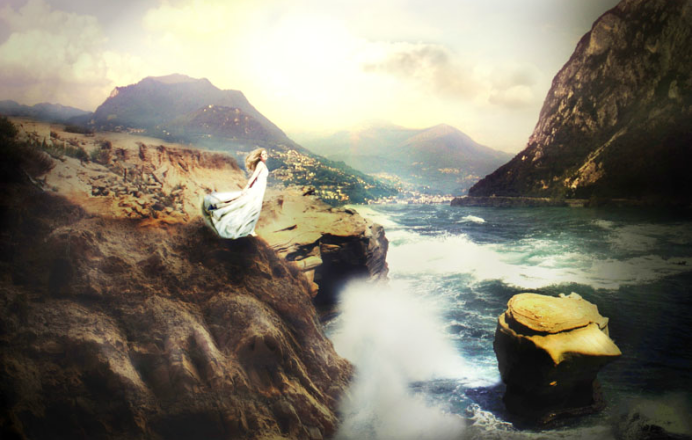
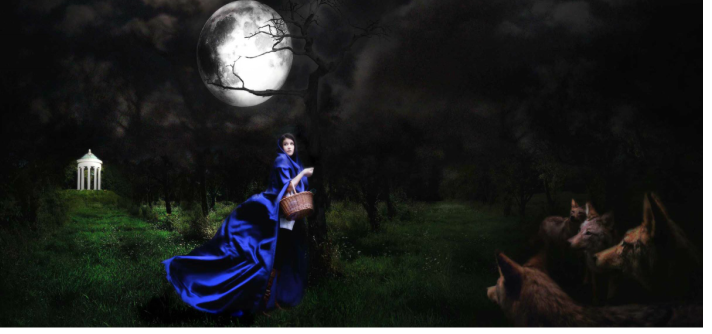
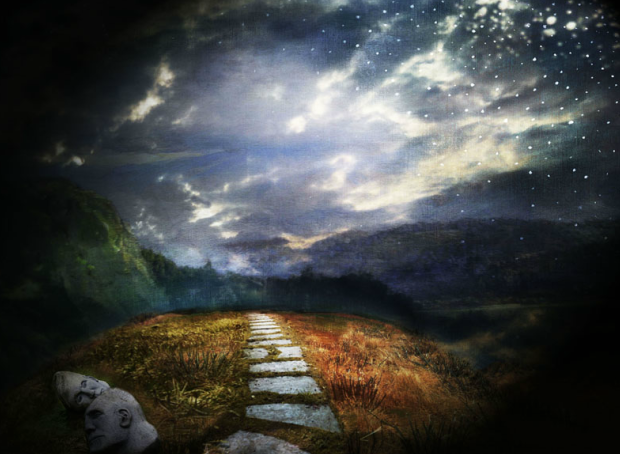
Artwork created from 2009 - 2011, focused around BFA senior thesis.
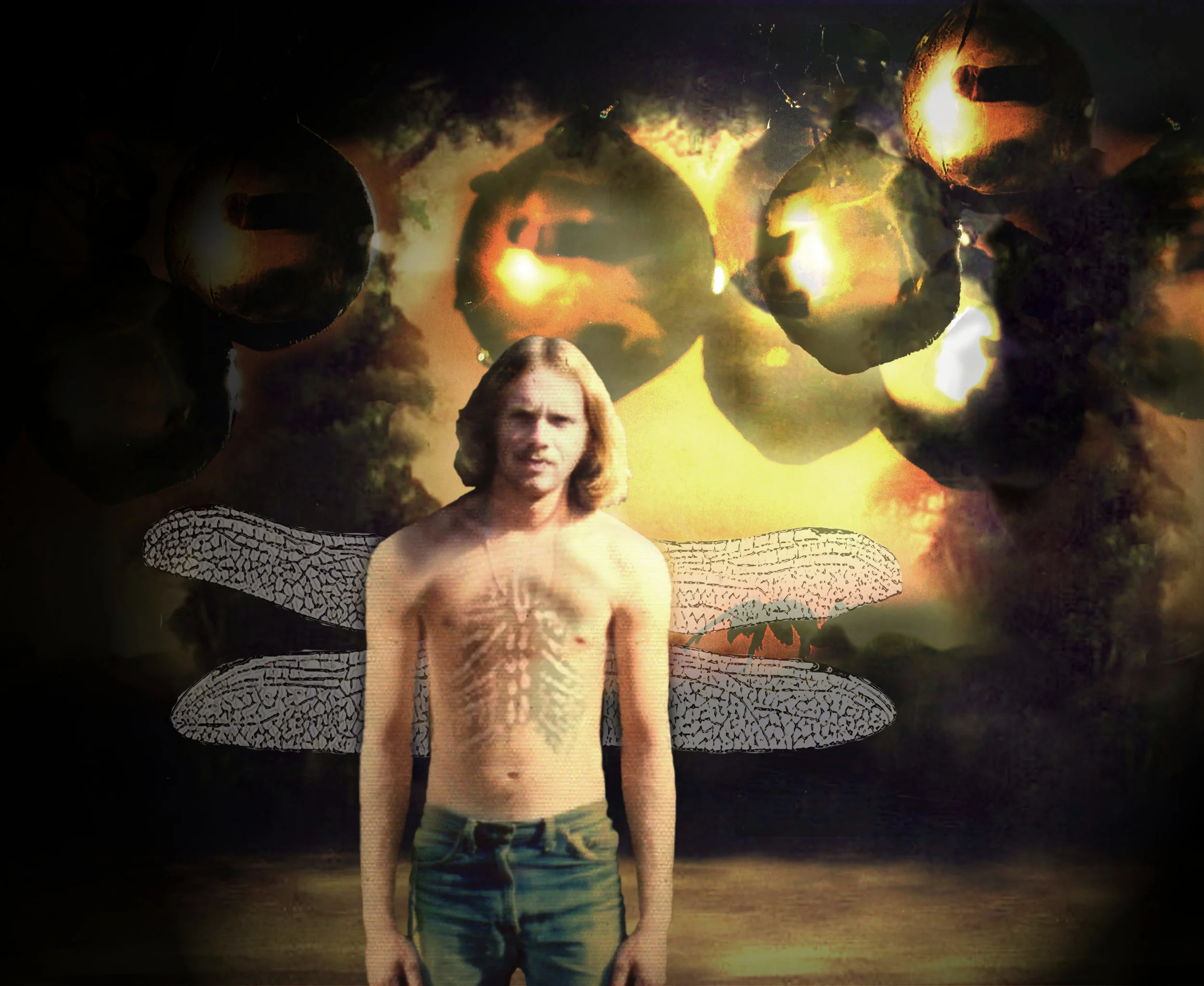
This image is part of my 2009 BFA Senior Thesis at the University of Massachusetts Amherst, a project selected for special recognition in the culminating exhibition held at Herter Art Gallery. The annual BFA Thesis Exhibition showcases the independent work of graduating seniors across disciplines—painting, sculpture, printmaking, and design—offering a public platform for the most advanced research, technical skill, and creative direction developed within the Department of Art.
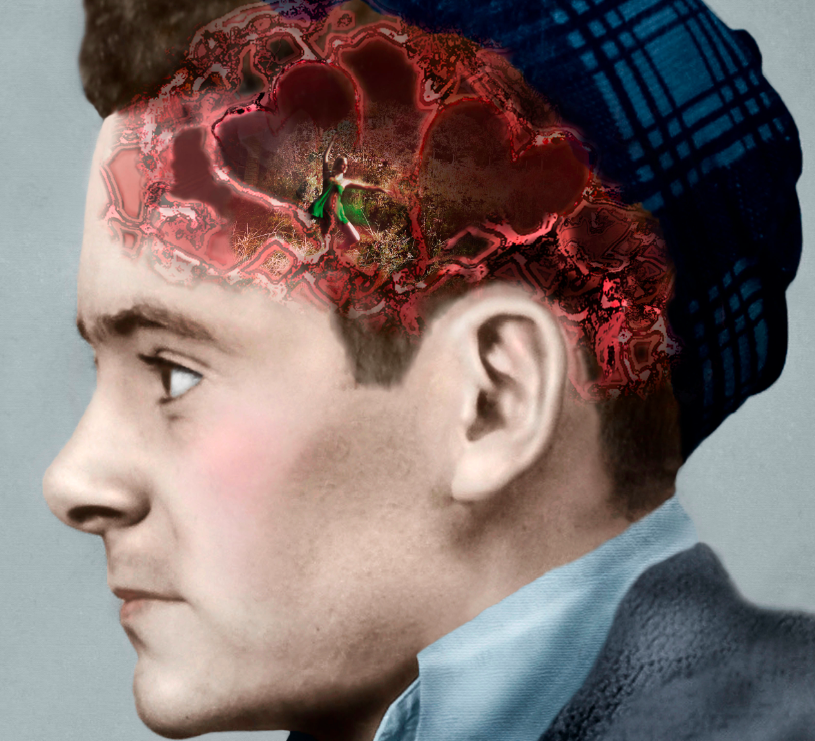
My thesis project centered on a mysterious figure referenced throughout my grandmother’s World War II diaries—an “unknown man.” I began by colorizing an archival photograph I found tucked within the pages of her writing; and then layered it with imagery I captured in the untamed fields of Hadley, Massachusetts. In this particular piece, the man’s skull is imagined as transparent—his brain exposed and flowering with anatomical hearts, neural pathways, and embedded emotional relics.
This collage became a meditation on memory’s fragility: how histories are passed down in fragments, half-truths, and myth. Just as the BFA Thesis required both a visual and written component, this work also straddled two forms of storytelling—one through the visual medium and another through intergenerational research and interpretation. It remains a formative piece in my practice, where personal history, place, and speculative reconstruction first merged into a singular artistic voice.
Introduction to my University Massachusetts Amherst thesis, 2009
“Before I could read, my mother would find me surrounded by stacks of picture books, carefully turning each page and examining the illustrations in detail. She always said I would "study" them, a word I’ve come to appreciate more over time—because that’s exactly what I was doing. I was absorbing the layered textures of Eric Carle’s collages and the intricate, whimsical worlds of Jan Brett. Long before I could understand the words, the imagery told me the story.
Over the years, I’ve collected countless books and listened to many narratives, but the most enduring stories have always come from my family. I would beg to hear my father’s mischievous childhood tales or my mother’s memories of her first love. These stories helped me see them as more than just parents—they became full, complex people. In my work, when I speak of “family,” I try to go beyond the fixed roles of Aunt, Uncle, or a Great-Grandfather I’ll never meet. I’m interested in their humanity—their personalities, flaws, and moments—that I’m connected to not by chance, but by blood.
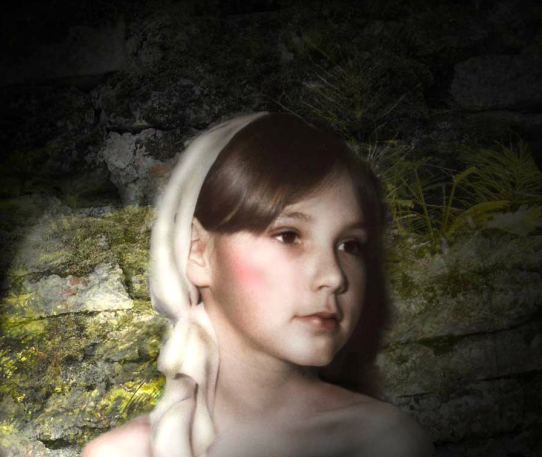
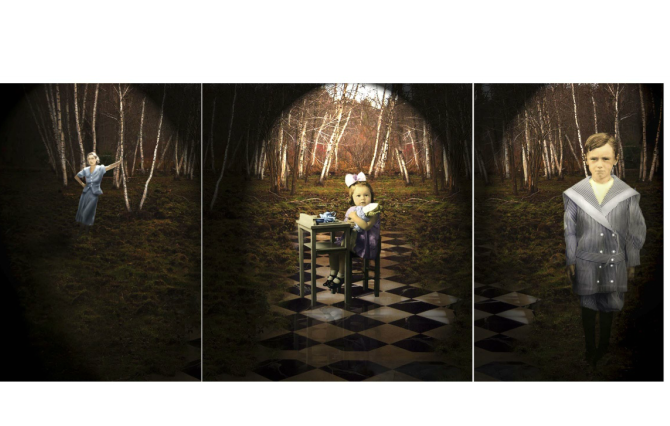
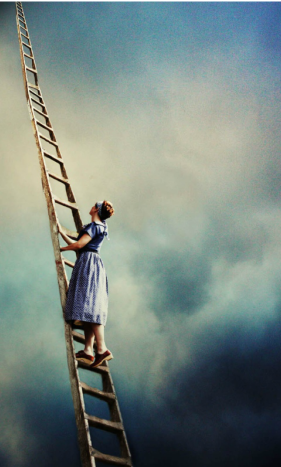
This thesis gave me a way to reanimate the old, fading photographs my family had tucked away for decades. Using Photoshop as my primary tool, I combined these archival images with my own photography to reconstruct visual narratives that honor and imagine my family’s lives. The process was meticulous: hours spent highlighting, layering, colorizing, and sometimes scrapping everything to begin again. It became a way for me to not just look at their faces, but to study them—returning to that early instinct, only this time through a new lens. This body of work holds them still in time, allowing me to witness their stories and piece together the threads of our shared humanity.”